How Often Should You Clean Your Mattress in Singapore? (And What Happens If You Don't)
By MyCleanHome · July 2026 · 7 min read
You wash your bedsheets every week. You vacuum your bedroom floor. But when did you last clean the mattress itself?
For most Singapore households, the answer is never — or at least not in the past year. The mattress gets a protector fitted and then essentially forgotten. It just sits there, being slept on for 7–8 hours every night.
The problem is what's accumulating inside it.
In this article:
What actually builds up inside a mattress
A mattress is essentially a large sponge that you sleep on every night. Over time, it absorbs and retains:
- Dead skin cells: Humans shed approximately 1.5 grams of dead skin per day. A significant portion of this ends up in the mattress. This is the primary food source for dust mites.
- Sweat and body oils: Even in air-conditioned Singapore homes, you sweat during sleep. The average person loses between 200–700ml of moisture per night. Most of this goes into the mattress.
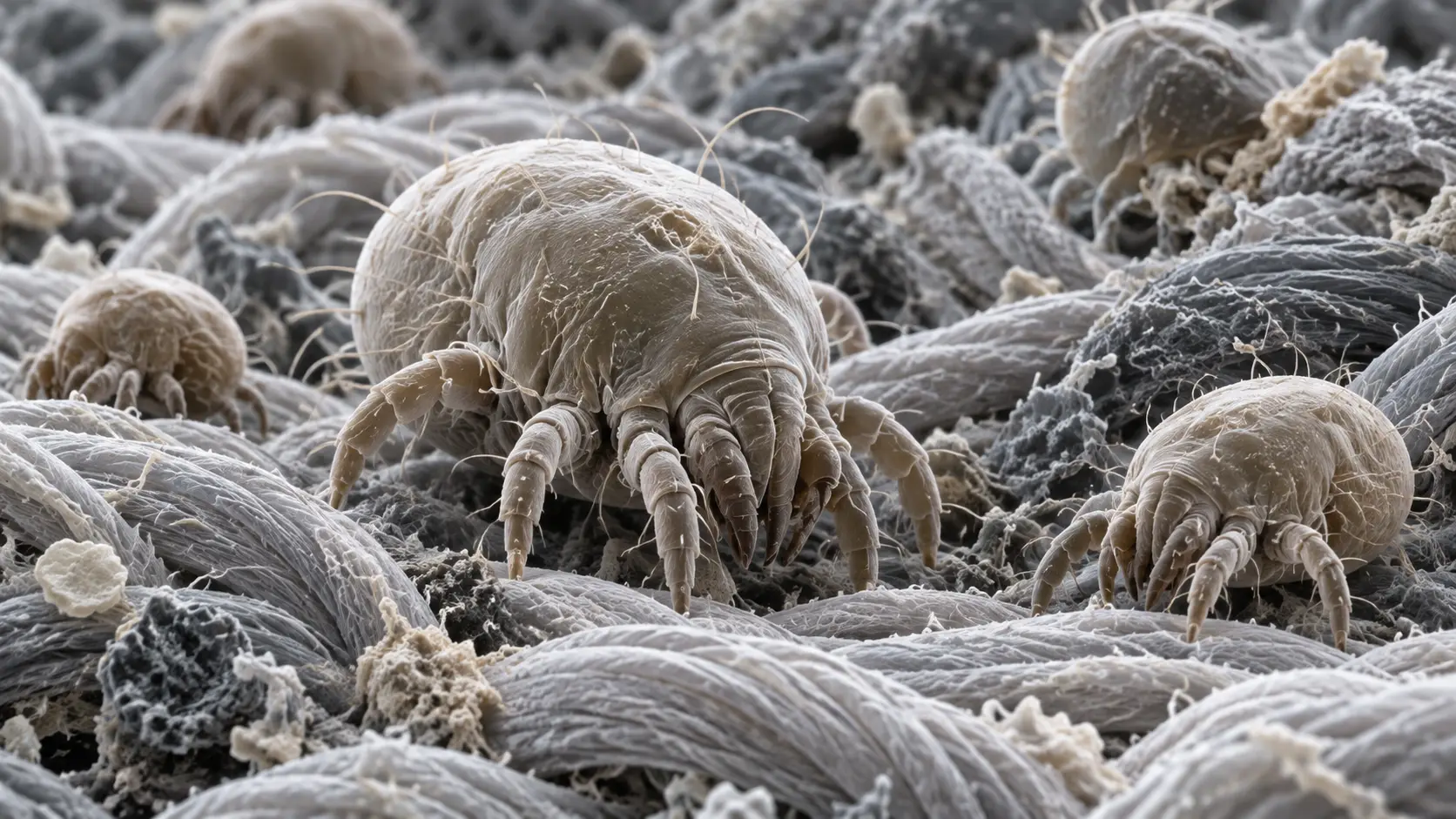
- Dust mites and their waste: Dust mites are microscopic arachnids that feed on dead skin cells. They thrive in the warm, humid environment inside a mattress. A typical unmaintained mattress may contain hundreds of thousands of dust mites. Their faecal matter — not the mites themselves — is the primary allergen that triggers asthma and allergies.
- Bacteria: The moisture and organic matter in a mattress create conditions that support bacterial growth, particularly around sweat-saturated areas.
- Mould spores: In Singapore's climate, mattresses — especially those on low frames close to the floor — are susceptible to mould growth, particularly on the underside.
- Pet dander: For households where pets sleep on or near the bed.
The weight test: A mattress that has never been professionally cleaned absorbs moisture, dead skin and mite populations over years. Studies have found that mattresses can double in weight over 10 years due to accumulated biological matter. This is not a comfortable statistic for something you spend a third of your life lying on.
Why Singapore's climate makes this significantly worse
Dust mite populations are directly correlated with temperature and humidity. Mites thrive in conditions above 25°C and relative humidity above 65%.
Singapore's average temperature is approximately 27°C year-round. Average relative humidity indoors — even in air-conditioned homes — typically sits between 60–75%. This is not slightly above the mite comfort threshold. It is squarely in the optimal range for dust mite reproduction.
Studies on dust mite populations in tropical climates consistently find significantly higher mite densities than equivalent studies in temperate countries. The guidance that's often cited — "clean your mattress once a year" — was developed in temperate climates where winter temperatures naturally suppress mite populations. In Singapore, those conditions never occur.
The practical implication: Mattress cleaning frequency recommended for Singapore should be roughly twice the rate recommended for cooler climates. Every 6 months is the professional standard for households without allergen concerns; every 3–4 months for those with asthma, allergies, or young children.
What a dirty mattress does to your health and sleep
Allergic reactions and asthma
Dust mite allergens (specifically the proteins in their faecal matter) are among the most common indoor allergens globally. Exposure during sleep — when you're in direct contact with the mattress surface for 7–8 hours — is the most significant source of allergen exposure for most people.
Symptoms range from rhinitis (persistent runny nose, sneezing) and eye irritation to triggering asthma attacks in susceptible individuals. For households with asthmatic family members, regular mattress cleaning is not optional maintenance — it's a meaningful health intervention.
Sleep quality
Even for non-allergic individuals, sleeping in an environment with elevated dust mite populations can affect sleep quality. Studies have linked high allergen exposure environments to increased nighttime awakenings, higher rates of snoring and nasal congestion, and reduced sleep efficiency — even in people who don't identify as allergic.
The subjective experience many clients report after their first professional mattress clean: sleeping noticeably better. The mechanism is real — reduced airway irritation, reduced inflammatory response during sleep.
Skin irritation
Direct contact with allergens and bacteria in an uncleaned mattress can contribute to skin irritation, particularly for children and those with sensitive skin or eczema. The warm, moist conditions during sleep exacerbate this.
How often should you clean your mattress in Singapore?
| Household type | Recommended frequency |
|---|---|
| Single adult, no allergies, no pets | Every 6–12 months |
| Couple, no allergies, no pets | Every 6 months |
| Household with children | Every 4–6 months |
| Household with pets (pet sleeps on/near bed) | Every 3–4 months |
| Anyone with asthma or dust mite allergies | Every 3 months |
| Elderly residents or immunocompromised | Every 3–4 months |
| After any significant illness (flu, gastro) | Immediate clean recommended |
| After any mattress stain or accident | Clean within 1–2 weeks |
Note on mattress protectors: A waterproof mattress protector is worthwhile — it prevents liquid penetration and reduces the rate of contamination. But it does not prevent dust mite colonisation. Mites are small enough to pass through most protector fabrics, and the protector itself needs washing monthly. It extends the interval between professional cleans; it doesn't eliminate the need for them.
Warning signs your mattress is overdue for cleaning
- Yellow staining: Sweat and body oils oxidise and leave yellowish stains. Visible staining typically indicates significant biological accumulation.
- Musty or stale odour: Bacteria and mould produce characteristic odours. If your mattress has a smell, it needs cleaning.
- Morning allergy symptoms: If you wake up with a blocked nose, sneezing, or itchy eyes that clear during the day, mattress allergens are a likely contributor.
- Skin irritation after sleeping: Unexplained itching or skin irritation that's worse in the morning.
- It's been more than 12 months: In Singapore's climate, annual minimum is the benchmark — not the ideal.
- You've never had it professionally cleaned: If you've had the mattress for more than 2 years and it's never been professionally cleaned, it needs cleaning.
Is vacuuming enough?
Regular vacuuming of the mattress surface is worthwhile and better than nothing. It removes loose debris and surface dust, which reduces the food available to mites. However, it doesn't address the populations and allergens that have accumulated in the lower layers of the mattress fill — and it does nothing for bacteria, mould, or stains.
Professional mattress cleaning typically combines:
- HEPA vacuum extraction — removes surface and sub-surface loose matter
- Enzyme-based cleaning — helps loosen suitable organic stains
- Wet extraction — lifts cleaning solution, loosened soiling and excess moisture from suitable mattresses
The combination of these three methods addresses what vacuuming alone cannot. For Singapore households with any allergy or health concern, professional cleaning is the standard — not a luxury.
Ready to clean your mattress?
WhatsApp us your mattress size and we'll reply with a fixed price during working hours. Ask us for the next available slot.
Get a Free Quote