Is Formaldehyde Dangerous After Renovation? What Singapore Homeowners Need to Know
By MyCleanHome · July 2026 · 8 min read
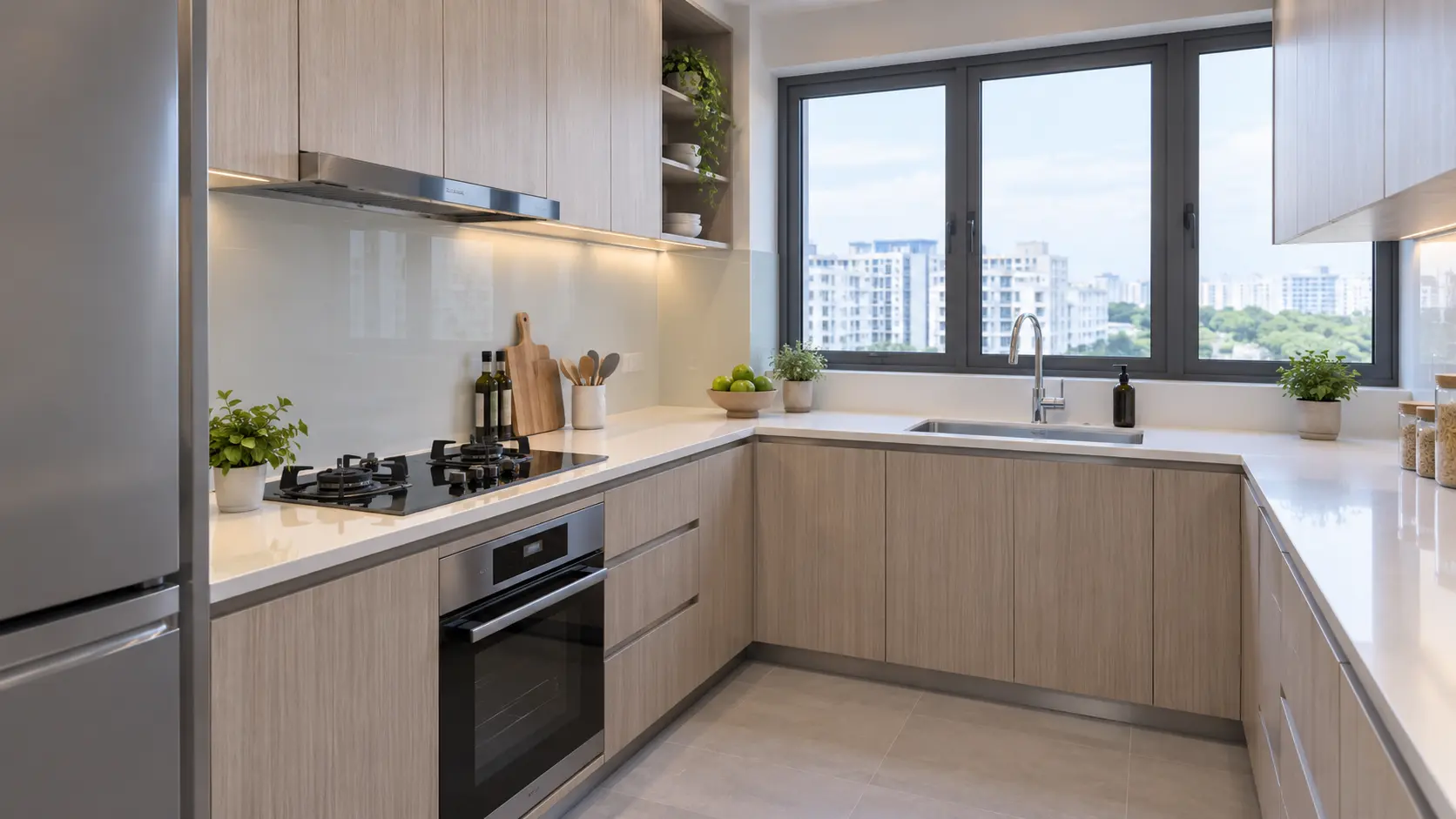
The renovation is finally done. Your new kitchen cabinets are installed, the laminate flooring is laid, the carpentry is complete. Everything looks and smells new — that characteristic sharp, slightly chemical scent that clings to new furniture and interiors.
That smell has a name: formaldehyde. And while the smell itself fades within a few weeks, the off-gassing continues at lower — but still measurable — levels for considerably longer.
This guide explains what formaldehyde is, why it matters specifically in Singapore's climate, what the actual health risks are at typical renovation exposure levels, how long it persists, and what you can do about it.
In this article:
What formaldehyde is and where it comes from
Formaldehyde is a volatile organic compound (VOC) — a carbon-based chemical that evaporates easily at room temperature and enters the air as a gas. It's naturally present at low levels in all environments and produced by many biological processes. The concern after renovation is elevated concentrations from synthetic building materials.
The primary sources in a Singapore renovation are:
- Composite wood and MDF panels: Most kitchen and wardrobe carpentry uses medium-density fibreboard (MDF) or particleboard. These are manufactured with urea-formaldehyde (UF) resins as a binder. These resins off-gas formaldehyde as they continue to cure after installation.
- Laminate flooring: Particularly lower-grade laminates with pressed-wood cores. Higher grades (European E1 or E0 rated) off-gas significantly less.
- Plywood: Used extensively in carpentry backing and shelving. The adhesives used contain formaldehyde-based resins.
- Construction adhesives and sealants: Contact adhesives and some silicone formulations contain VOC compounds.
- Paints and varnishes: Most modern water-based paints have reduced VOC formulations, but some primers and oil-based finishes contain significant VOC levels.
- Foam insulation and upholstery: Some spray foam products and synthetic foam cushioning contain formaldehyde-based components.
In a Singapore home with a full renovation — new flooring, full set of kitchen cabinets, built-in wardrobe carpentry, a feature wall — the combined surface area of formaldehyde-emitting materials can be substantial.
Why Singapore's climate makes this worse
Off-gassing rates are directly correlated with temperature and humidity. Higher temperature increases the rate at which VOCs evaporate from materials. Higher humidity can accelerate breakdown of UF resins in composite wood.
Singapore's ambient conditions — average 27°C year-round, humidity consistently above 70% — mean that formaldehyde off-gassing occurs at a significantly faster rate than in temperate climates. A laminate floor that might off-gas for 6 months in a Northern European climate may off-gas at a higher rate for a longer period in Singapore.
The compounding factor is ventilation. Singapore's air conditioning culture means homes are frequently sealed — windows closed, AC running — which concentrates indoor air pollutants rather than diluting them with outdoor air.
Health effects — what the evidence actually says
Formaldehyde is classified by the World Health Organisation as a Group 1 carcinogen — meaning there is sufficient evidence that it causes cancer in humans at sufficient exposure levels.
However, context matters enormously here. The occupational exposure levels that established this classification — workers in industries with heavy formaldehyde use — are many times higher than the levels measured in newly renovated residential homes. The risk from renovation off-gassing is real but much lower than the alarming "Group 1 carcinogen" label suggests in isolation.
At the concentrations found in newly renovated Singapore homes, the realistic health effects are:
Short-term / acute effects (at higher concentrations)
- Eye, nose and throat irritation — burning or watery eyes, runny nose
- Headaches and dizziness
- Skin irritation or rash on contact
- Aggravation of asthma symptoms
Who is most at risk
- Infants and very young children — developing respiratory systems, closer to floor level where concentrations can be slightly higher, spend more time in the home
- Elderly residents — reduced respiratory resilience
- People with asthma or respiratory conditions — formaldehyde is a known trigger
- People who are highly sensitive to VOCs — a real subset of the population that reacts to lower concentrations than average
Practical recommendation: Do not move infants, young children or elderly residents into a newly renovated unit until it has been properly ventilated for at least 2–4 weeks — ideally with air quality confirmed by testing. For healthy adults, the risk from normal renovation off-gassing is low, but ventilation is still strongly recommended.
How long does off-gassing last in Singapore?
This is the most common question — and the honest answer is: longer than most people expect.
UF resins in composite wood emit formaldehyde most heavily in the first few weeks after installation, with a characteristic sharp smell. This peak phase typically lasts 2–8 weeks. After this, emissions drop substantially but continue at lower levels for considerably longer — in some cases, years.
The half-life of off-gassing from composite wood materials in tropical conditions is typically estimated at 3–6 months for the significant reduction phase. After 6–12 months in a well-ventilated space, levels in most homes settle below WHO indoor air quality guidelines.
Factors that accelerate the process:
- High-quality materials (E1 or E0 rated products emit significantly less)
- Good ventilation (open windows, cross-breeze, reduced AC sealing)
- Air purifiers with activated carbon filters (adsorb VOC molecules from air)
- Higher ambient temperatures (paradoxically accelerate the total off-gassing, but also hasten the overall completion)
What you can do — practical steps in order of effectiveness
1. Ventilate aggressively — and do it immediately
Open all windows and doors for as many hours per day as possible in the weeks after renovation completion. Cross-ventilation (windows on opposite sides of the unit open simultaneously) is more effective than single-opening ventilation. If security permits, leave windows cracked overnight.
In Singapore's heat, this conflicts with the instinct to run the AC. The compromise: ventilate as many hours per day as tolerable, then use AC. Avoid sealing the unit completely for extended periods in the first month.
2. Use an air purifier with an activated carbon filter
HEPA-only air purifiers do not adsorb VOCs — HEPA filters particle matter (dust, pollen, mould spores) but VOCs pass straight through. You need an activated carbon filter specifically, which adsorbs VOC molecules including formaldehyde. Look for units with substantial carbon media (not just a thin carbon layer on a pre-filter).
3. Time your move-in appropriately
If possible, delay occupancy for 2–4 weeks after renovation completion while ventilating daily. This dramatically reduces the peak exposure period. This isn't always practical — but when it is, it's the single most effective measure.
4. Choose low-emission materials for future renovations
E0 (no added formaldehyde) and E1 (low formaldehyde) rated composite wood products are available in Singapore and emit significantly less than standard products. Ask your contractor specifically about emission ratings — this is worth paying a small premium for.
5. Professional formaldehyde removal
For households with high-risk occupants or confirmed elevated readings, professional formaldehyde removal services are available. These typically involve applying activated carbon-based compounds or photocatalytic treatments to surfaces to adsorb and neutralise formaldehyde. We offer this as an add-on to post-renovation cleaning — WhatsApp us to enquire.
Should you test your air quality?
Air quality testing is worth considering if:
- You have infants, elderly residents or people with respiratory conditions moving in
- You can still smell a chemical odour after 4+ weeks of ventilation
- Household members are experiencing persistent symptoms (eye irritation, headaches) that they don't otherwise get
- You had an extensive renovation with large amounts of new composite carpentry
Professional air quality testing in Singapore typically costs $150–$400 depending on scope. Results give you a formaldehyde reading against WHO/NEA indoor air quality guidelines and help you make an informed decision about whether further measures are needed.
Post-renovation cleaning + formaldehyde enquiry
We offer formaldehyde removal as an add-on to post-renovation cleaning. WhatsApp us to discuss your situation.
WhatsApp to Enquire